
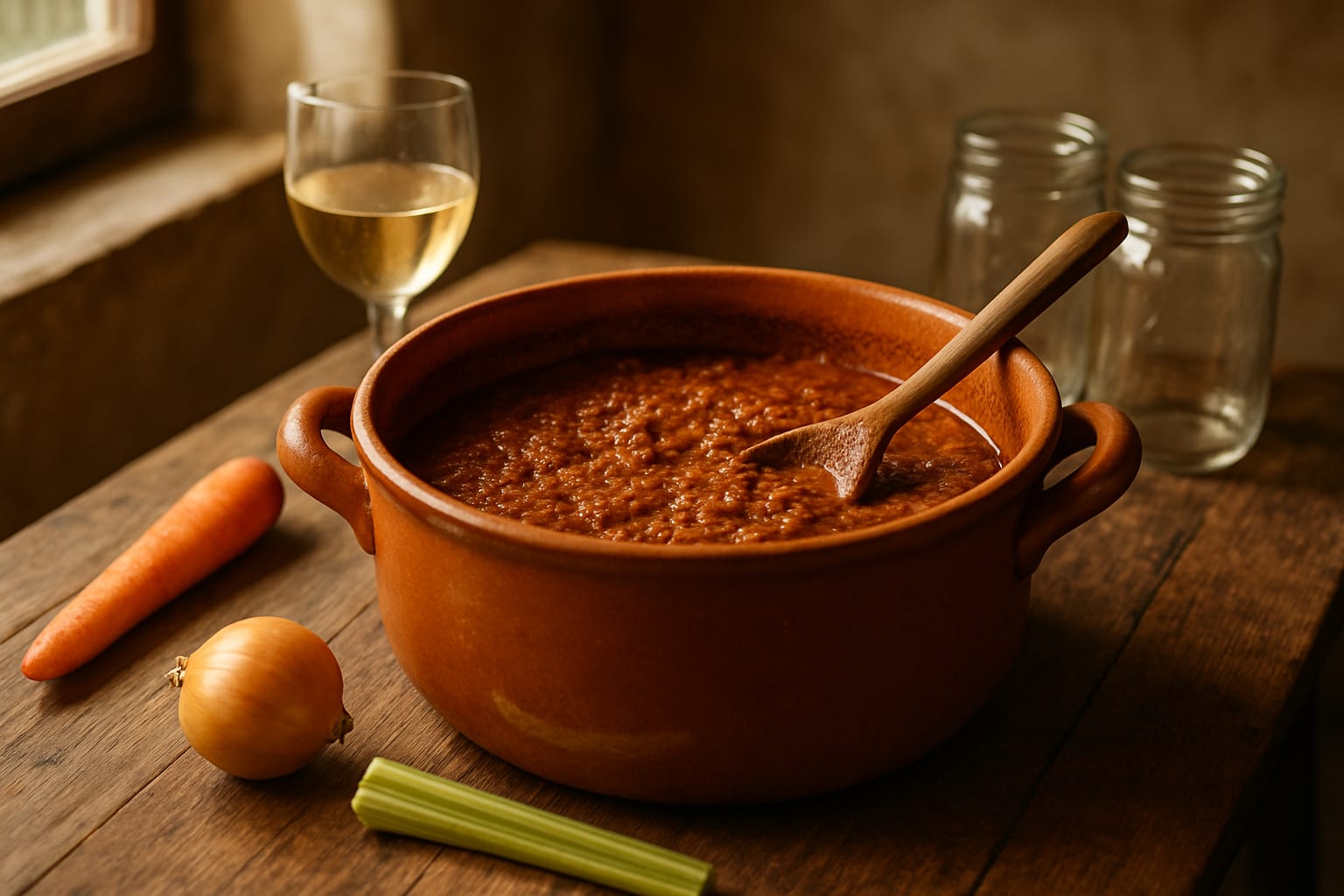
In Emilia-Romagna, no pot in the house worked harder than the one Nonna Fiore kept for Sunday’s ragù. She rose before the sun, tied her apron twice around her waist, and stood at the board with her knife, cutting carrot, celery, and onion fine and even, never rushed. ‘Il soffritto è la fondazione della casa,’ she would say — the soffritto is the foundation of the house, and everything built on top of it depends on getting it right. By midday the kitchen smelled of wine and browned meat, and by evening, when the whole family gathered, the sauce had barely begun its real work: hours more of slow, patient simmering at the back of the stove, filling the house with a smell that meant everyone should come home. She always made far more than one Sunday could eat, ladling the extra into jars for the cold cellar and, later, into the freezer for the busy weeks ahead. In 1982, the Accademia Italiana della Cucina in Bologna sat down and argued over grams of pancetta and glasses of wine until they had the recipe exactly right and filed it for the record. Nonna Fiore never needed the paper — she carried it in her hands. Follow this ragù alla bolognese recipe step by step and bring the flavours of Emilia-Romagna into your kitchen.
Ingredients
Method
- Before anything touches the pot, do the knife work properly. Dice the carrot, celery, and onion into pieces no larger than a grain of rice, all roughly the same size, so they melt evenly into the sauce rather than staying stringy or crunching underfoot. I know the food processor is faster, but it bruises the vegetables and lets out their water too soon, which stops them from turning sweet and golden later. Keep the three vegetables together on the board — this is your battuto, and once it hits the fat it becomes the soffritto, the fragrant base every good ragù is built on. Have your pancetta and beef measured and ready too, because once the cooking starts, it moves quickly from one stage to the next.
- Warm the olive oil or butter in a heavy-bottomed pot over medium-low heat — something with real weight to it, since this pot will hold the sauce for hours and thin metal will scorch. Add the diced pancetta and let it render slowly, stirring now and then, until it turns pale gold and releases its fat into the pot. This fat is precious; it will carry flavour through every later stage, so do not rush it or turn up the heat to hurry things along. You want gentle sizzling, not spitting.
- Tip the battuto of carrot, celery, and onion into the rendered fat and lower the heat slightly. Cook slowly, stirring often, for a good ten to fifteen minutes, until the vegetables soften completely and turn translucent and faintly golden at the edges, never browned or crisp. This is the step people rush most, and it is the one that decides whether your ragù tastes deep and rounded or thin and raw. Be patient here — a soffritto cooked properly will smell sweet, not sharp, before you add anything else.
- Raise the heat to medium-high and add the beef, breaking it apart gently with a wooden spoon so it browns rather than steams. Spread it across the pot and let it sit for a minute before stirring, so the underside catches real colour — this browning, what we call the rosolatura, builds a deep savoury flavour you cannot get any other way. Keep turning and browning in batches if your pot feels crowded, since a pot too full will only stew the meat grey and wet. Season lightly with salt now to help draw out and concentrate the juices.
- Pour in the white wine and let it bubble hard for a few minutes, scraping up any browned bits stuck to the bottom of the pot with your spoon. Let the wine reduce until you can no longer smell raw alcohol, only a warm, slightly tangy aroma left behind. This step lifts every bit of flavour that browning left clinging to the pot and folds it back into the sauce, so do not skip it even if you are tempted to move straight to the tomato.
- This is the step that surprises most people outside Emilia-Romagna, but it is essential to a proper bolognese: pour in the milk now, before any tomato goes in, and let it simmer gently until it is almost fully absorbed by the meat, about ten minutes. The milk mellows the meat and rounds out its flavour in a way that cannot happen once the tomato’s acidity is in the pot. Nonna Fiore always insisted on this order and would shake her head at any ragù that smelled only of tomato with no gentleness underneath it. Trust the process, even if the pot looks pale and unfinished right now.
- Stir in the tomato passata and the tomato paste, if using, along with a good pinch of salt and a few grinds of black pepper. Bring everything to the barest simmer — just a few lazy bubbles breaking the surface, never a rolling boil — then partially cover the pot, leaving a gap for steam to escape. Lower the heat as far as it will go while still keeping that gentle movement; this is the pace the sauce will hold for the next several hours.
- Now comes the part that cannot be rushed: let the ragù simmer for at least three, and ideally closer to four hours, stirring every twenty minutes or so and scraping the sides and bottom of the pot each time. If it looks like it is drying out or catching, ladle in a little warm stock, a splash at a time, never more than it needs. You will know it is ready when the fat separates slightly at the edges, the sauce has turned a deep brick red-brown, and a spoonful clings thickly rather than pooling with liquid. Taste and adjust the salt and pepper only near the end, once the flavours have had time to settle together. If using, stir in the cream in the last few minutes for extra silkiness.
- Turn off the heat and let the ragù cool at room temperature for no more than an hour before dividing it into containers or freezer bags — this keeps it safe and helps it keep its texture once frozen. Ladle it into meal-sized portions, since a big block is awkward to thaw and tempting to waste. Label each container with the date, then refrigerate what you will use within three or four days and freeze the rest for up to three months. To serve, thaw in the refrigerator overnight and warm gently over low heat with a splash of stock or milk, exactly as Nonna Fiore always did with the jars pulled up from the cellar.