
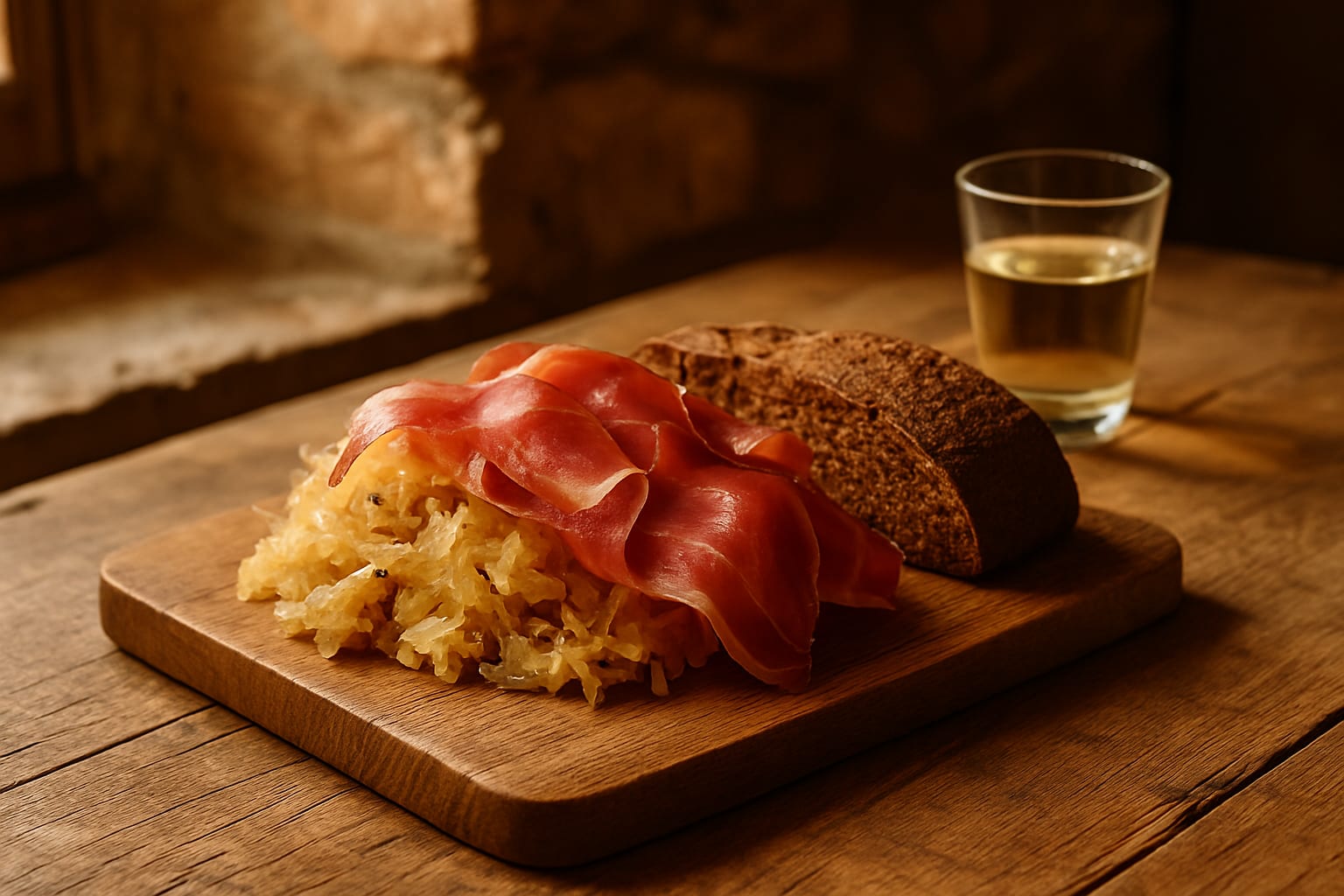
Up in the high valleys of South Tyrol, where the mountains speak both Italian and German, Nonna Fiore learned to cook a plate that tells the whole story of the border in a single bite. Speck con crauti was never a fancy dish in our house — it was what appeared on the table when the cellar shelves were full of last autumn’s cabbage and the smokehouse still held a haunch of speck from the winter before. She would warm the crauti slowly in butter, just enough to soften their sharp edge, scent the pot with caraway and a splash of white wine, and only then lay the speck across the top — sliced so thin you could see the light through it, never cooked hard, just gently warmed by the crauti beneath. It is a dish built on patience and restraint, much like the people of these valleys, who learned centuries ago to take the best of both Austrian and Italian tables and make something entirely their own. In our family, this was the dish that opened a meal on a cold evening, served with dark rye bread and a glass of the valley’s crisp white wine. It still smells, to me, like the kitchen door blowing open with mountain air. Follow this speck con crauti recipe step by step and bring the flavours of Trentino-Alto Adige into your kitchen.
Ingredients
Method
- Tip the sauerkraut into a colander and taste a strand. If it is very sharp, rinse it briefly under cold water and squeeze out the excess liquid with your hands. If it is already mild, simply drain it well. Either way, loosen the strands apart with your fingers so they cook evenly.
- Melt the butter or lard in a heavy pot over medium-low heat. Add the chopped onion and cook gently, stirring now and then, for about 5 minutes, until it turns soft and translucent but takes on no colour. This slow start builds the sweetness that will carry the whole dish.
- Stir in the drained sauerkraut, caraway seeds, bay leaf, grated apple, and the pinch of sugar or honey. Toss everything together over the heat for a minute so the crauti soaks up the fat and the caraway begins to release its fragrance.
- Pour in the white wine and let it bubble for a moment before covering the pot. Lower the heat and let the crauti braise gently for 20 to 25 minutes, stirring occasionally and adding a splash of water if the pot looks dry. The cabbage should soften without turning mushy, and the sharpness should mellow into something rounder and more fragrant.
- Remove the lid for the last few minutes of cooking to let any remaining liquid reduce. Taste and adjust with black pepper and, if needed, a little more sugar — the balance you want is savoury with just a whisper of sweetness underneath. Remove the bay leaf.
- While the crauti finish cooking, slice the speck as thinly as you possibly can — paper-thin, almost translucent, is the goal. A very sharp knife and cold speck straight from the refrigerator make this much easier. If you own a meat slicer, this is the moment to use it.
- Spoon the warm crauti into shallow bowls or onto a wooden board. Drape the speck slices over and around the warm cabbage — do not stir the speck into the pot or return it to the heat. The gentle warmth rising from the crauti is enough to soften the fat and release the smoky aroma without cooking the meat, which is what keeps it silky rather than tough.
- Serve straightaway with thick slices of dark rye bread or a piece of Schüttelbrot for scooping, and, if you like, a small glass of the same white wine you cooked with. This is a dish that loses its charm if it sits and cools, so bring it to the table the moment it’s plated.