
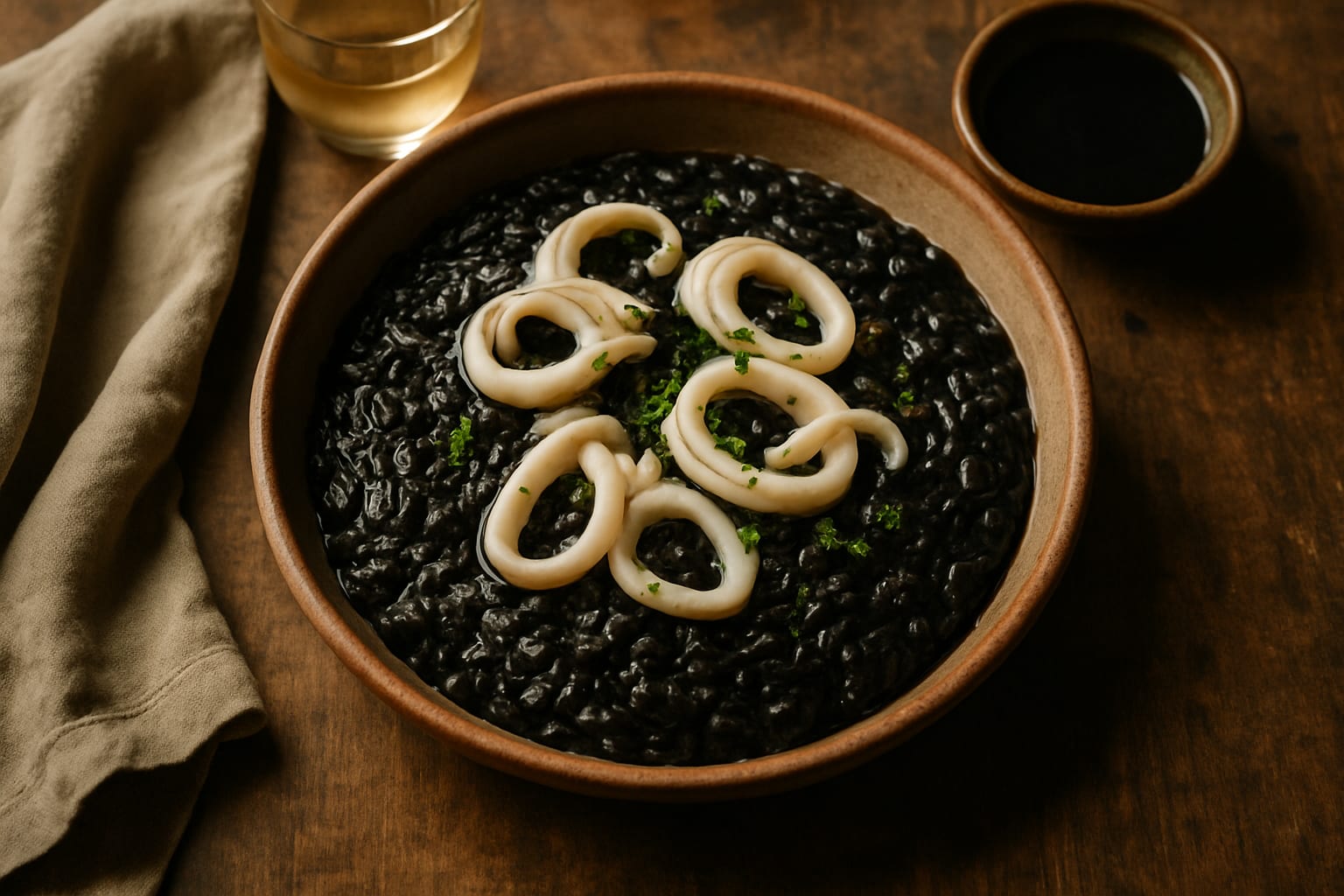
When I was a young bride living near the fish market at Rialto, my mother-in-law took me by the wrist one morning and said, ‘Today you learn to cook like a Venetian, not like a girl from the hills.’ She set two fat cuttlefish on the table, their little silver ink sacs glistening like tiny purses of midnight, and taught me to save every drop. In Veneto, nothing from the lagoon is wasted, and this risotto is proof — humble cuttlefish, good rice, a splash of wine, and that startling black ink transform into something that looks almost mysterious but tastes of the sea itself, briny and sweet all at once. Fishermen’s wives in Burano and Chioggia have made this dish for generations, feeding their families on what the boats brought home and turning simple ingredients into a plate fit for a feast day. I remember the first time I served it to my own children, how their eyes went wide at the black rice before they took one bite and asked for more. There is a little magic in food that surprises you like that. Follow this risotto al nero di seppia recipe step by step and bring the flavours of Veneto into your kitchen.
Ingredients
Method
- Begin by cleaning the cuttlefish over a bowl, because you want to work slowly and gently near the ink sac so it does not tear before you are ready. Pull the head and tentacles away from the body, remove the transparent quill-like cartilage, and pull out the pale membranes and innards, setting the small silvery ink sacs carefully aside in a little dish. Rinse the cuttlefish bodies and tentacles under cold water, pat them dry, and slice the bodies into thin rings or short strips, keeping the tentacles whole or halved if large. If you are nervous about piercing the ink sacs, ask your fishmonger to clean the cuttlefish for you and simply request the ink separately, which many Venetian fishmongers sell by the small jar for exactly this dish.
- Warm half the olive oil in a wide, heavy-bottomed pan over medium-high heat until it shimmers, then add the cuttlefish pieces in a single layer so they sear rather than steam. Cook for just two to three minutes, stirring now and then, until they turn opaque and lightly golden at the edges, then splash in the small glass of wine or brandy and let it bubble away for a minute to lift any browned bits from the pan. Season lightly with salt, then remove the cuttlefish to a plate and set aside — it will finish cooking gently later, and pulling it out now keeps it tender instead of rubbery, which is the most common mistake with cuttlefish.
- In the same pan, add the remaining olive oil and the minced onion, cooking it slowly over low-medium heat for about five to six minutes until it turns soft and translucent but never browned, because a caramelized onion would fight with the delicate brine of the seafood. Stir in the garlic during the last minute so it perfumes the oil without scorching. This slow, patient base is what gives the risotto its quiet savoury foundation beneath the bold flavour of the ink.
- Add the dry rice directly to the softened onion and garlic, stirring constantly for two to three minutes until every grain is coated in oil and turns slightly glossy and translucent at the edges, with a small opaque dot remaining at the center of each grain. This step, called tostatura, seals the outside of the rice grains just enough so they release their starch gradually rather than all at once, which is the secret to a risotto that stays al dente in the center while turning creamy all around it. You will hear the grains click softly against the pan when they are ready.
- Pour in the white wine and let it simmer, stirring, until it has almost completely evaporated and the sharp smell of alcohol has softened into something sweeter. This brightens the whole dish and keeps the richness of the seafood from feeling heavy, so do not skip it even if you are tempted to rush ahead to the stock.
- Squeeze the reserved ink sacs into a small cup with a ladleful of warm stock, breaking them open with the back of a spoon and stirring until the liquid turns fully black, then pour this inky stock into the rice along with a couple more ladles of plain warm stock. Stir well so the color spreads evenly through every grain — this is the moment the dish transforms, and it is always a little thrilling to watch the rice turn from white to a deep, glossy black in front of you.
- Continue adding warm stock one ladleful at a time, stirring frequently and waiting until each addition is nearly absorbed before adding the next, for about sixteen to eighteen minutes in total. Keep the heat at a gentle simmer rather than a hard boil, since cooking too fast toughens the rice and prevents the starch from developing properly. Taste often as you go, adjusting salt gradually, since the seafood and its ink already carry good natural saltiness.
- When the rice is tender but still has a slight bite at the very center, fold the reserved cuttlefish and any juices back into the pan along with one last small ladle of stock, and cook for just one more minute to warm it through gently. Remove the pan from the heat and stir in the butter if using, along with a final drizzle of good olive oil, beating the risotto vigorously for a few seconds until it ripples like a wave when you tilt the pan — this is what we call all’onda, loose and glossy rather than stiff. Scatter over the parsley, taste one last time for salt, and let it rest, covered, for one minute before serving.