
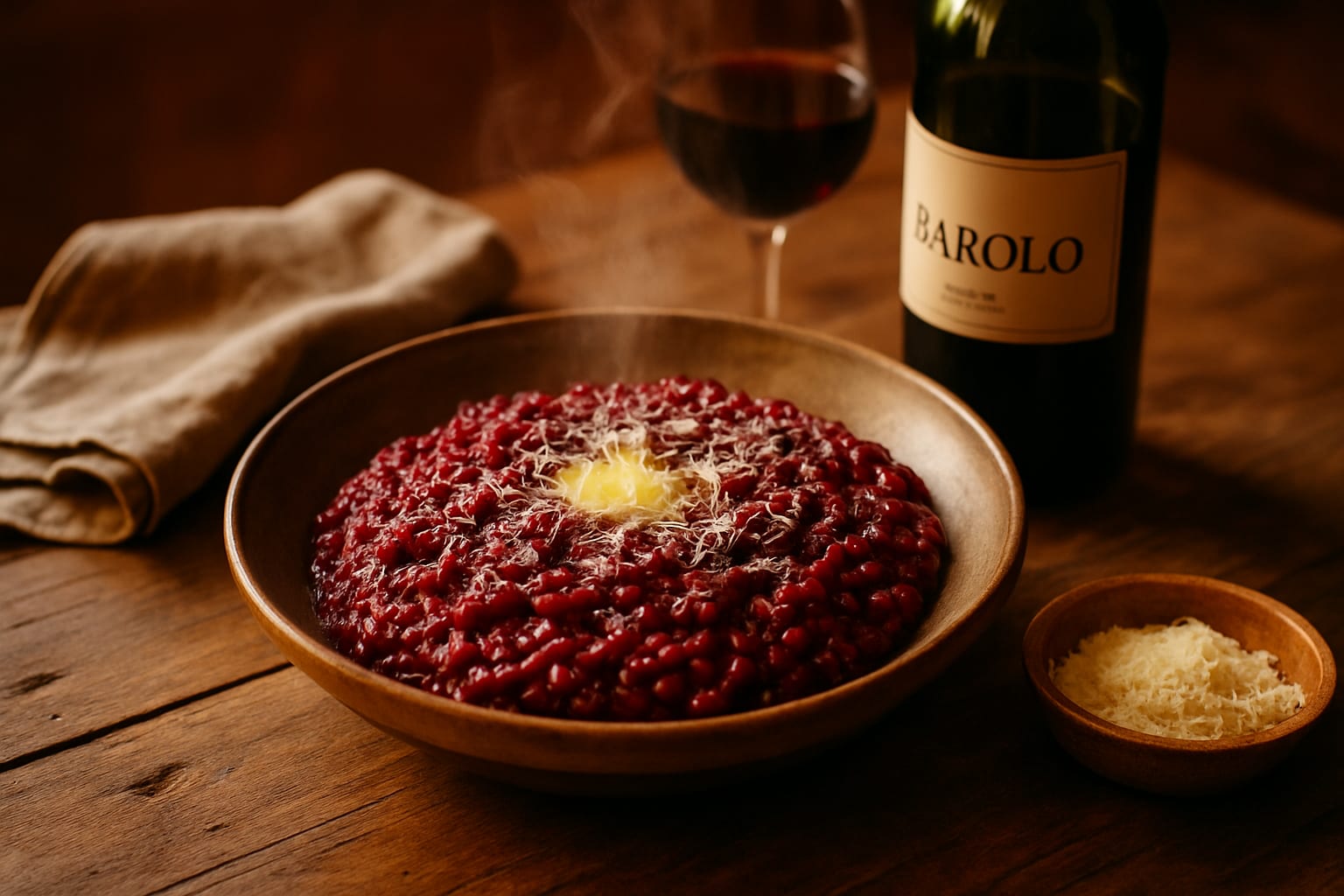
In Piemonte we have a saying about Barolo: ‘il vino dei re, il re dei vini’ — the wine of kings, the king of wines. My grandfather kept only two bottles a year for himself, and one of them always ended up not in a glass, but in the risotto pot, because he said a wine so noble deserved to be tasted twice — once in the sip, once in the spoon. I remember standing on a stool by the stove in our kitchen near the Langhe hills, watching the rice drink in that deep garnet wine until the whole pot turned the colour of a November sunset. My nonna would stir slowly, patiently, telling me that risotto teaches you to wait for what is worth having, just like the Nebbiolo grapes that need their long, foggy autumns to ripen into something extraordinary. This is not a quick weeknight dish — it is a dish for a Sunday, for family gathered close, for the last good bottle in the cantina. The rice comes from our own Piemonte rice fields near Vercelli, the butter from our mountain dairies, and the wine from the vineyards just beyond our door. Every spoonful carries the whole region in it. Follow this risotto al barolo recipe step by step and bring the flavours of Piemonte into your kitchen.
Ingredients
Method
- Pour your stock into a saucepan with the bay leaf and keep it at a gentle simmer on the burner right next to your risotto pot — this is not optional, my dears, because pouring cold stock into hot rice shocks it and stops the cooking, giving you a chalky, uneven texture. Open your Barolo now too, so it can breathe a little, and measure out your wine and rice so everything is within arm’s reach. Risotto asks for your full attention once it begins, so there is no time to go searching for ingredients halfway through. In my kitchen we call this the moment of quiet before the real work starts.
- In a wide, heavy-bottomed pot, melt half the butter with the olive oil over medium-low heat. Add the minced onion and a small pinch of salt, and let it soften slowly for six or seven minutes, stirring often, until it turns translucent and sweet but never browned. A browned onion will turn bitter and fight with the wine later, so patience here rewards you. The oil mixed with the butter also raises the smoking point slightly, protecting your soffritto while it works its magic.
- Add the rice directly to the pot with the onion, and stir constantly for two to three minutes until every grain is glossy and coated in fat, and you hear a faint, nutty toasting sound rather than a hiss. This step, la tostatura, seals the outside of each grain so it releases its starch slowly and evenly during cooking, which is the real secret to a creamy risotto rather than a sticky one. You will notice the grains turning slightly translucent at the edges while the centre stays opaque and white — that is exactly what you want to see.
- Pour in the Barolo all at once and let it bubble vigorously, stirring so the rice doesn’t stick to the bottom. The wine will seem shockingly purple against the pale rice, but do not be alarmed — this is the dish becoming what it is meant to be. Let it simmer until almost fully absorbed and the harsh alcohol smell has cooked away, leaving behind only its deep, tannic fruitiness, about four to five minutes. This is the moment my grandfather always leaned over the pot and breathed in deeply, calling it ‘il profumo delle colline’ — the perfume of the hills.
- Begin adding the warm stock one ladleful at a time, stirring frequently and waiting until each addition is nearly absorbed before adding the next. This slow rhythm coaxes the starch gently out of the rice without ever drowning the grains, building that famous creamy consistency we call all’onda, or ‘like a wave.’ Keep the heat at a steady medium simmer — too hot and the rice cooks unevenly on the outside before the centre is done, too gentle and it turns gluey from sitting too long in liquid. This stage takes about eighteen to twenty minutes, and it is the heart of the whole dish, so stay close and keep stirring.
- Around the fifteen-minute mark, start tasting the rice every couple of minutes. You are looking for a grain that is tender on the outside but still holds a tiny, firm bite at its very centre, what the Italians call al dente for rice. If you run low on stock before the rice is ready, warm a little more water and continue — never rush this by dumping in extra liquid all at once, or the texture will fall apart on you. Season with salt carefully here, remembering that both the stock and the cheese to come will add their own saltiness.
- Once the rice is just right, take the pot off the heat entirely — this matters, because adding cold fat to a boiling pot ruins the emulsion. Stir in the remaining cold butter, the Parmigiano, the crumbled Castelmagno if using, and that reserved splash of Barolo, beating the risotto vigorously with a wooden spoon for a good minute. This vigorous stirring, called la mantecatura, whips air and fat into the starchy liquid to create the glossy, wave-like creaminess that defines a great risotto rather than a plain rice dish. Cover the pot and let it rest for two minutes before serving, which allows the texture to settle into perfection.
- Spoon the risotto into warmed shallow bowls right away, tilting each bowl gently so the rice spreads into a loose, wave-like layer rather than a stiff mound. Finish with an extra grating of Parmigiano, a crack of black pepper, and if you like, a drizzle of good olive oil. Risotto waits for no one, my loves — it continues cooking even off the heat, so gather the family to the table first and serve the moment it is ready.