
In Nonna Fiore’s kitchen, prosciutto di San Daniele is never really cooked — it is honoured. She tells us that in the flatlands of Friuli, where cold air rolling down from the Carnic Alps meets the warm, salt-laden breeze off the Adriatic, and the Tagliamento river hums along keeping the air just moist enough, something happens to a simple pig’s leg and a handful of sea salt that cannot be recreated anywhere else in the world. For more than a year, in low stone buildings with shuttered windows that open and close with the seasons, the hams hang and wait, trusting the wind to do the work no oven ever could. Nonna Fiore remembers being sent, as a girl, to the salumeria with a coin wrapped in a handkerchief, asking for a hundred grams sliced thin, please. There was no recipe for it then, and there is barely one now — good prosciutto asks only that you respect it: slice it properly, serve it at the right temperature, and don’t crowd the plate with too much else. In our house it appears at every family gathering, draped simply over a board with good bread, sweet butter, and whatever fruit the season offers. Follow this prosciutto di San Daniele recipe step by step and bring the flavours of Friuli-Venezia Giulia into your kitchen.
Ingredients
Method
- Leave the prosciutto in the refrigerator until just before you’re ready to slice it. Cold meat holds its shape and slices far more cleanly and thinly than prosciutto at room temperature — this single detail makes the biggest difference to how the final dish looks and feels on the tongue.
- If slicing by hand, use a long, thin, flexible knife and a gentle sawing motion along the full length of the blade rather than pressing straight down — this keeps the delicate fat marbling intact instead of smearing it. If you have access to a calibrated meat slicer, that works beautifully too, and is how most delicatessens in Friuli actually prepare it. Either way, the slices should be thin enough to see light through.
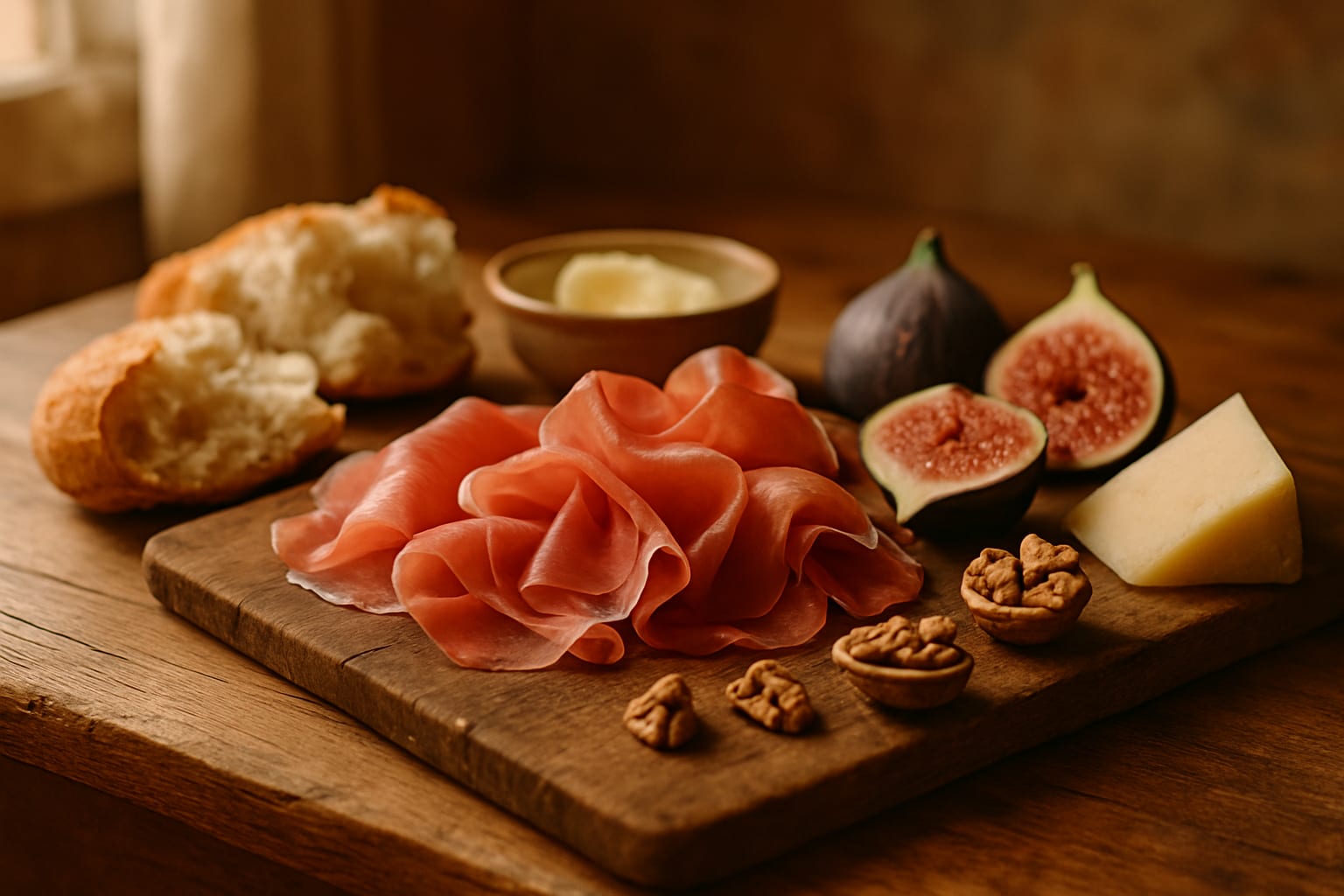
- Lay the slices on a wooden board or plate in loose, ruffled folds rather than flat, stacked layers. This keeps the slices from clumping together and lets each one warm gently and release its aroma.
- Let the arranged prosciutto sit at room temperature for 5 to 10 minutes before serving. Straight from the fridge, the fat is firm and the flavour is muted; a few minutes of rest lets it soften just enough to taste properly.
- Slice the bread and set out the butter alongside it. Arrange the figs (or melon), walnuts, and Montasio, if using, around the prosciutto rather than on top of it, so each element stays distinct on the plate.
- Bring the platter to the table immediately — prosciutto tastes best in the minutes right after slicing, before the cut edges dry out. Add a light drizzle of olive oil and a few turns of black pepper if you like, and pour the wine.