
When the first snow settled on the peaks above our valley, my grandmother’s kitchen in Trentino-Alto Adige always smelled of woodsmoke, simmering broth, and the sweet smokiness of speck. Nonna Fiore learned canederli from her own mother, who had learned them from a neighbour with Austrian roots, back when the mountains here belonged to a different empire and the language at the market shifted between Italian and German depending on who you asked. Nothing in her larder was ever wasted, and canederli were born from exactly that instinct: yesterday’s bread, a little milk, an egg, whatever cured meat hung in the cellar, all folded together and given new life in a pot of golden broth. She would let the youngest cousins roll the dough into balls between their palms, laughing when one fell apart in the pot and insisting, always, that the secret was patience, not skill. In our house this soup meant the table was full, the fire was lit, and the mountain winter could do its worst outside the door. Follow this canederli in brodo recipe step by step and bring the flavours of Trentino-Alto Adige into your kitchen.
Ingredients
Method
- Put the cubed stale bread into a large bowl and pour over the lukewarm milk, turning the pieces gently so every cube is moistened but not drowning. Nonna Fiore always added the milk a little at a time, waiting for the bread to drink it in before deciding if more was needed, because bread from different loaves can be thirstier or drier than you expect. Leave it to sit for about ten minutes until the cubes are soft all the way through but still hold their shape, not collapsed into mush.
- While the bread soaks, melt the butter in a small pan over medium heat and add the chopped onion. Cook it slowly, stirring now and then, until it turns soft and translucent but not browned, about five minutes. Add the diced speck and let it warm through for another minute or two, just enough to release its smoky fat into the onion without crisping it hard. Set the pan aside to cool slightly before it meets the bread, so the eggs don’t scramble on contact.
- Pour the beaten eggs, the onion and speck mixture, the chives, parsley, nutmeg, salt, and pepper over the soaked bread. Using your hands, mix everything together gently but thoroughly, pressing and folding rather than kneading hard, until the bread starts to break down slightly and bind into a cohesive, slightly sticky mass. Sprinkle in the flour a tablespoon at a time, just enough to give the mixture body — you want it to hold together when pressed, not to turn into a stiff paste.
- Cover the bowl with a clean kitchen towel and let the dough rest for fifteen to twenty minutes at room temperature. This pause matters more than it looks: the bread finishes absorbing the liquid evenly, the flour hydrates fully, and the whole mixture firms up into something you can actually shape. Resist the urge to shape it straight away, no matter how ready it looks.
- Wet your hands lightly and roll a portion of the dough, about the size of a small apricot, into a firm, smooth ball between your palms, using a bit of flour if it sticks. Before shaping the rest, bring a small pot of the broth (or salted water) to a gentle simmer and drop in this single test dumpling. Let it cook for about twelve minutes; if it holds together and floats, your dough is ready. If it falls apart, mix in a little more flour or a spoonful of dry breadcrumbs to firm it up before shaping the remaining canederli — this is exactly the trick Nonna Fiore taught every grandchild before letting them near the pot.
- Bring the full amount of beef broth to a gentle simmer in a wide pot — it should barely bubble, never boil hard. Lower the shaped dumplings in one by one, giving them space to move, and let them cook uncovered for twelve to fifteen minutes, until they rise to the surface and feel light and set when you press one gently with a spoon. Resist stirring too much; a soft swirl now and then is enough to keep them from sticking to the bottom.
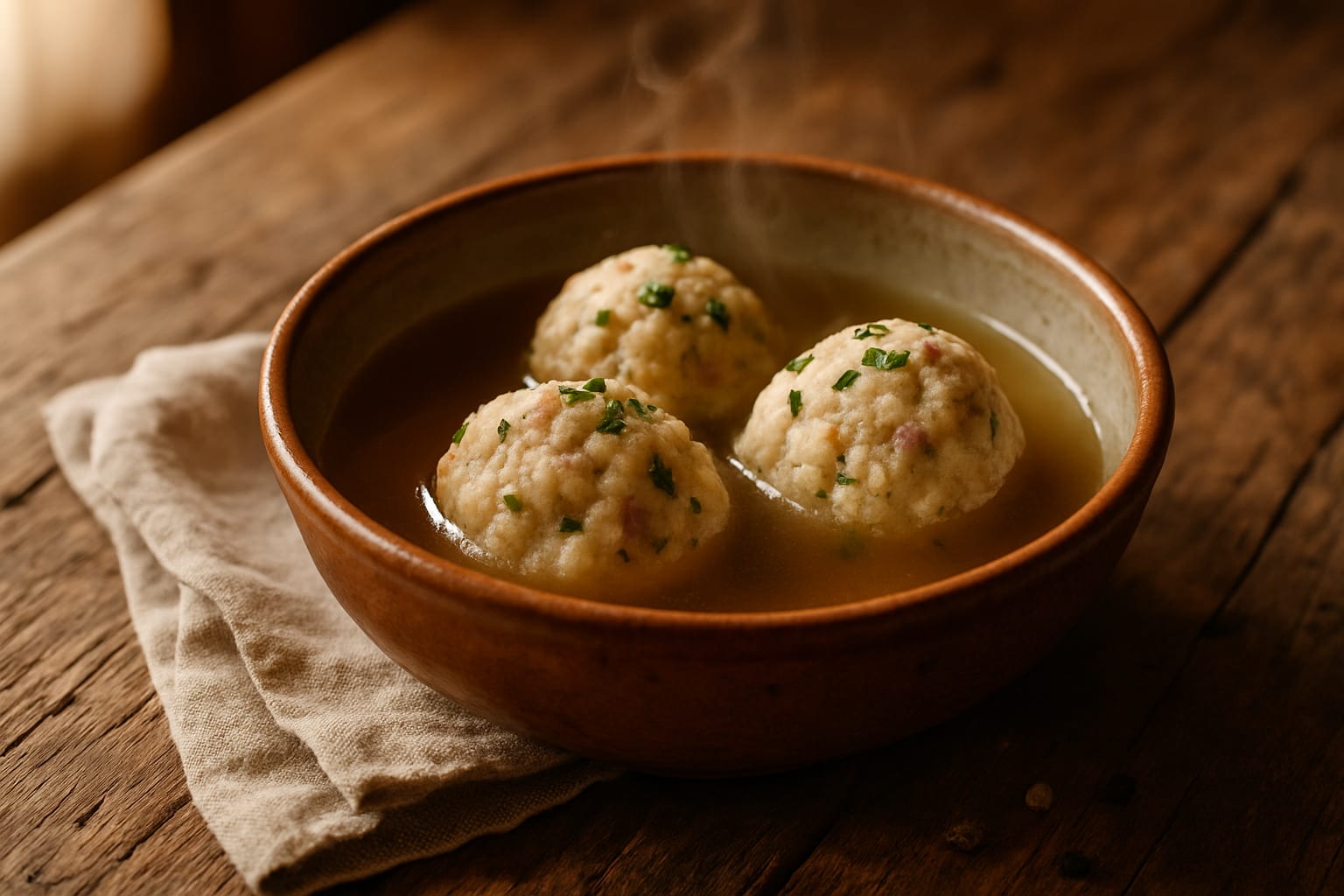
- Ladle two or three canederli into each warmed bowl and cover generously with the hot broth they cooked in. Scatter over a few extra snipped chives and a crack of black pepper, and bring the bowls to the table at once, while the steam is still rising. This is a dish that waits for no one — Nonna Fiore always said a canederli left too long in its bowl loses its soul along with its heat.